Best Pool Cleaner for Storm Debris NZ: 2026 Heavy-Duty Guide
Imagine waking up after a wild New Zealand storm only to find your pristine pool has been transformed into a muddy soup of leaves, silt, and grit. It's a frustrating sight that usually means hours of back-breaking manual vacuuming. Finding the best pool cleaner for storm debris nz is the only way to avoid the constant fear of clogging your main filter or burning out your expensive pump with heavy sand and debris.
We know how exhausting it is to battle the elements just to keep your pool swim-ready. This 2026 guide is designed to help you reclaim your weekend and protect your equipment by identifying the right heavy-duty tools for the job. You'll discover how the latest robotic cleaners can clear even the worst storm mess within 24 hours. We will walk you through the top-performing models that handle silt and large leaves independently, ensuring your pool's heart stays safe and your water stays clear with minimal effort.
Key Takeaways
- Learn why standard maintenance routines fail against the unique mix of abrasive silt and heavy grit left behind by New Zealand storms.
- Understand why independent filtration is vital to protecting your pool pump from expensive damage and clogging during heavy cleanup.
- Discover why choosing the best pool cleaner for storm debris nz involves looking for high-capacity baskets rather than just suction power.
- Compare the efficiency of robotic cleaners like the iGarden K Series against traditional suction models for rapid storm recovery.
- Follow a simple two-step process to restore water clarity and balance your chemistry within 24 hours of a significant weather event.
Table of Contents
- Why Storm Debris Requires a Specialised Cleaning Approach
- Robotic vs Suction Cleaners: Which Handles NZ Storms Better?
- Essential Features for Tackling Silt, Leaves, and Grit
- Top-Rated Pool Cleaners for Storm Recovery in New Zealand
- Step-by-Step: Restoring Your Pool After a Storm
Why Storm Debris Requires a Specialised Cleaning Approach
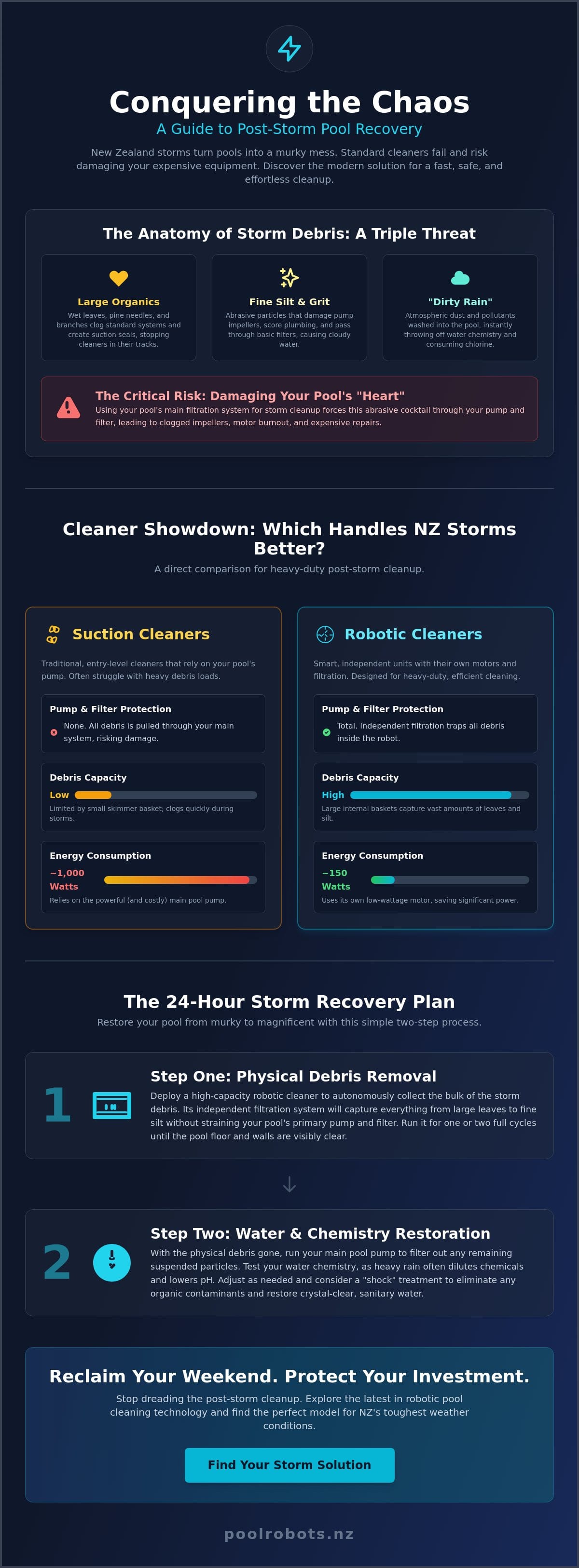
Storm debris is a different beast compared to the everyday dust your pool collects. It is a heavy, abrasive cocktail of organic matter, fine silt, and sharp grit. When you try to clear this mess using a traditional manual vacuum or a suction cleaner, you are essentially forcing all that muck through your pool's main plumbing. This puts immense pressure on what we call the "heart of the pool": your pump and filter. Most standard equipment just isn't built to handle the volume or the texture of material left behind after a New Zealand gale.
Relying on your main filtration system for heavy storm cleanup often leads to clogged skimmer baskets or, worse, impeller damage. If grit reaches the pump, it can score the internal components, leading to expensive repairs and shortened equipment life. This is why finding the best pool cleaner for storm debris nz owners can rely on is about more than just convenience; it's about asset protection. By using a device with its own independent filtration, you keep the storm muck out of your main system entirely, ensuring your primary filter stays clear for its actual job of maintaining water clarity.
The Dual Threat: Silt and Large Organics
Storms bring a two-pronged attack that standard cleaners struggle to manage. First, there's the fine silt. These particles are often so small they pass straight through standard mesh bags, remaining suspended and making the water look milky. Then there are the large organics. If you have Pohutukawa trees or pines nearby, you know the struggle. Large, wet leaves often create a "suction seal" over the mouth of traditional suction cleaners, stopping them in their tracks. Proper swimming pool sanitation requires removing these contaminants quickly before they break down and consume your chlorine. Independent filtration is critical for storm recovery because it captures these varied debris types in a self-contained basket before they can impact your pool's primary circulation.
NZ Weather Factors: From Cyclones to Southerlies
New Zealand’s geography creates unique challenges for pool owners. In the North Island, humid cyclones often bring heavy silt and fine volcanic dust. Down in the South Island, fierce southerlies can dump massive amounts of pollen and pine needles into the water in minutes. We also deal with "dirty rain," where dust particles in the atmosphere are washed into the pool, instantly throwing off your water chemistry. When the garden is littered with fallen branches and garden clutter, corded cleaners can become a frustrating tripping hazard or get tangled easily. Choosing the best pool cleaner for storm debris nz weather requires a machine that can navigate a cluttered floor while filtering out both the microscopic and the massive without getting stuck.
Robotic vs Suction Cleaners: Which Handles NZ Storms Better?
Choosing between a suction cleaner and a robotic one often comes down to how much work you want to do yourself. Suction cleaners are common entry-level options, but they often become a liability when the weather turns. They rely on your pool's primary pump, which means every piece of grit and every sodden leaf has to travel through your expensive plumbing before being caught. During a heavy storm, your skimmer box can fill with debris in under an hour. When that happens, the pump starves for water, leading to potential motor burnout and high repair costs. You'll also find yourself backwashing the filter constantly to clear the silt, wasting hundreds of litres of water in the process.
In contrast, robotic cleaners operate completely independently. They have their own internal motors and high-capacity filter baskets. This means the storm muck stays in the robot, not in your pool's "heart." Because they don't rely on your main pump, you save significantly on power. A standard pool pump usually draws around 1,000 watts, while a modern robotic cleaner typically uses only about 150 watts. This makes the robot a much more energy-efficient choice for the long cleaning cycles needed after a storm. If you want a stress-free recovery, you can explore the iGarden range to see how independent filtration simplifies the job.
Why Suction Cleaners Struggle After a Storm
The biggest issue with suction cleaners is the limited capacity of the skimmer box. After a New Zealand gale, the volume of organic matter is simply too much for a small basket to handle. Additionally, suction hoses frequently get tangled in fallen branches or garden clutter, which can trap air in the system and cause the pump to lose prime. Over time, the abrasive silt pulled through the pipes can score the pump's internal components. When safely cleaning a flooded pool or one with heavy runoff, keeping that debris out of your main lines is a critical safety and maintenance step.
The Robotic Solution: Efficiency and Independence
Robotic cleaners provide a "set and forget" solution that is perfect when you have other storm damage to clear around the property. They use dedicated scrubbing brushes to lift the fine "silt film" that rain often leaves on the pool floor. The best pool cleaner for storm debris nz owners can choose is often a cordless model. Post-storm gardens are usually messy with branches and shifted furniture, making power cords a major tripping hazard. iGarden cordless robots navigate these environments without getting tangled, providing a thorough clean even if your outdoor power outlets are damp or inaccessible. This independence ensures your pool is swim-ready within 24 hours without putting any strain on your filtration system.
Essential Features for Tackling Silt, Leaves, and Grit
When you're searching for the best pool cleaner for storm debris nz, it's easy to get distracted by marketing terms like "maximum suction." While power is important, storm recovery actually requires a balance of volume and precision. Raw suction doesn't help if the filter basket is full within ten minutes or if the mesh is too coarse to catch the fine silt that turns your pool cloudy. You need a machine built to handle the heavy lifting while simultaneously polishing the water.
High-capacity debris baskets are the most critical feature for post-storm cleanup. After a significant weather event, your pool can hold five to ten times the usual amount of organic matter. If a cleaner's basket is too small, the machine will stop or lose efficiency long before the floor is clear. You want a design that prioritises internal volume, allowing the robot to collect piles of sodden leaves without needing constant intervention. Additionally, intelligent navigation ensures the robot doesn't just act like a bulldozer, pushing debris into corners. It should be able to calculate the most efficient path to climb over leaf mounds and ensure every centimetre of the floor is covered.
- Active Scrubbing: Brushes that spin faster than the robot moves help dislodge "stuck-on" mud and silt before they can stain your liner.
- Large Intakes: Essential for swallowing large gum leaves or twigs without clogging the machine's throat.
- Ease of Cleaning: A top-access basket makes it simple to rinse out the heavy muck once the cycle is finished.
Filtration Micron Ratings Explained
For New Zealand pool owners, understanding "microns" is the key to clear water. A micron is simply a measurement of how small a particle the filter can trap. After a storm, you're facing a dual threat. You need a coarse filter to catch the big stuff, like pine needles and leaves, but you also need ultra-fine filtration for the microscopic silt and "dirty rain" particles. The iGarden K Series handles this by using sophisticated filtration that manages different debris sizes at once. This prevents the fine grit from recirculating and clouding your water, which is a common failing of basic cleaners.
Wall Climbing and Waterline Scrubbing
Storm surges often leave a distinct "tide mark" of oils, pollen, and fine grit right at the waterline. If this isn't addressed quickly, the sun can bake these contaminants onto your pool surface, making them very difficult to remove later. Choosing the best pool cleaner for storm debris nz means finding a model that doesn't just stay on the floor. Robots that climb the walls and spend time scrubbing the waterline save you from the back-breaking task of manual brushing. This feature ensures that the entire pool structure, not just the floor, is restored to a pristine state within 24 hours of the clouds clearing.