What to Look for in a Robotic Pool Cleaner: A 2026 Buyer’s Guide
Could the very machine meant to save you time actually be adding to your stress with tangled cords and missed corners? Many New Zealand pool owners find themselves frustrated by high energy bills from old suction cleaners and the constant struggle to find local parts for imported models. It's a common headache, but it doesn't have to be your reality. Understanding exactly what to look for in a robotic pool cleaner in 2026 is the first step toward a maintenance-free summer.
This guide will help you discover the essential features that define a high-performance pool robot so you can stop scrubbing and start swimming. We'll explore why cordless freedom and dual-micron filtration are now the industry standards for handling tough NZ debris like gum leaves. Whether you're considering the latest iGarden K Series Pool Robots or looking for energy-efficient ways to keep your water crystal clear, we provide the expert advice you need. From smart navigation to reliable local support, you'll learn how to choose a machine that delivers a perfect clean with zero effort.
Key Takeaways
- Learn why switching to an autonomous cleaner reduces wear on your main pool pump and helps lower your monthly energy bills.
- Understand exactly what to look for in a robotic pool cleaner to ensure it can effectively manage both fine silt and heavy New Zealand debris.
- Discover the reality of the 2026 cordless revolution and how to determine if a battery-powered model is right for your pool's layout.
- Identify the specific scrubbing technology and track types needed to safely clean different surfaces, from smooth fiberglass to textured concrete.
- Find out why local NZ warranty support and expert advice are the most important features for long-term machine reliability.
Table of Contents
- Why Upgrade to a Robotic Pool Cleaner in 2026?
- Core Features: Filtration, Scrubbing, and Navigation
- Cordless vs. Corded: The 2026 Cordless Revolution
- Pool Type and Surface Compatibility: What Kiwis Need to Know
- The Smart Choice: Why Pool Robots NZ is the Local Expert
Why Upgrade to a Robotic Pool Cleaner in 2026?
A robotic pool cleaner is essentially a self-contained, intelligent vacuum that operates entirely independently from your pool's main filtration system. Unlike older technology that plugs into your skimmer box, these modern machines have their own internal motors and high-capacity filters. This independence is a critical factor when deciding what to look for in a robotic pool cleaner. In 2026, the industry has moved toward machines that don't just wander aimlessly. They use advanced mapping to ensure every corner of your pool is spotless.
To understand why this shift is so significant, it helps to look at the history and development of pool cleaners. Traditional suction and pressure cleaners rely on your expensive main pool pump to provide movement and suction. This forces your pump to work at high speeds for hours, leading to inflated energy bills and faster wear on your filtration equipment. Robotic cleaners, such as the iGarden K Series, use their own low-voltage power source. They can reduce your manual labor and chemical usage by up to 90% by filtering the water as they move and scrubbing surfaces to prevent algae growth.
Robotic vs. Suction Cleaners: The Real Cost
The true cost of a suction cleaner isn't the price on the box; it's the hidden expense of running your main pump at full capacity. Robotic cleaners operate for just a few cents per cycle. Because they catch debris in their own onboard canisters, they don't push dirt into your main filter. This means you won't need to backwash or clean your primary filter nearly as often. For those looking to maximize efficiency, pairing a robot with an iSaver Variable Frequency Drive allows you to run your main filtration at a whisper-quiet, low-energy speed while the robot handles the heavy scrubbing independently.
The Convenience Factor for Modern Homeowners
Modern life is busy enough without adding "scrubbing the pool" to your weekend to-do list. Modern robotics offer a genuine "set and forget" experience. You simply drop the unit into the water and walk away. Because these machines circulate water as they work, they help distribute pool chemicals more effectively. This prevents the "dead spots" where algae usually starts. With the 2026 shift toward app-integrated maintenance, you can now schedule a cleaning cycle from your phone. It ensures your pool is always crystal clear and ready for a swim without any setup or heavy hoses to manage.
Core Features: Filtration, Scrubbing, and Navigation
Choosing a pool robot isn't just about suction power. It's about how the machine interacts with your pool's specific environment. When you're researching what to look for in a robotic pool cleaner, you'll find that the best models in 2026 focus on three main pillars: how they filter, how they scrub, and how they move. In New Zealand, our pools often face a tough combination of heavy organic debris like gum leaves and fine, wind-blown dust. A basic cleaner might pick up the big stuff but leave the water looking cloudy.
Dual-stage filtration is the answer to this problem. These systems use a coarse filter to catch large debris and a secondary, ultra-fine filter to trap microscopic particles. Many of the top robotic pool cleaners of 2026 have moved away from messy filter bags in favor of rigid canisters. These are far more durable and much easier to clean with a quick spray from the garden hose. This level of filtration ensures that even the smallest contaminants are removed before they can affect your water chemistry.
Microns Matter: Understanding Filter Grades
The "micron rating" of a filter determines the size of the particles it can stop. For most residential pools, a rating between 20 and 50 microns is the ideal range. This is fine enough to catch silt and pollen that would otherwise pass right through a standard mesh. Top-access canisters are a must-have feature for convenience. They allow you to lift the filter out from the top of the machine without getting your hands dirty or flipping the robot over. If your backyard is prone to fine dust, ensure your machine includes pleated filter panels rather than just a simple mesh screen.
Wall Climbing and Waterline Scrubbing
The waterline is often the dirtiest part of any pool. This is where body oils, sunscreen, and floating debris congregate to form a stubborn scum line. High-performance robots use advanced sensors to detect when they've reached the top of the wall. Once there, they use active scrubbing brushes that rotate faster than the drive tracks to agitate the surface and remove buildup. This prevents algae from gaining a foothold in the porous grout of tiled pools or the corners of vinyl liners. For fiberglass pools, look for high-grip tracks or specialized brushes to ensure the robot doesn't slip as it climbs. To see how these features come together in a reliable package, you can browse our specialized range of iGarden K Series robots designed for local Kiwi conditions.
Cordless vs. Corded: The 2026 Cordless Revolution
For years, the standard advice from many retailers was to avoid battery-powered cleaners. Critics argued they lacked the suction power and endurance of corded models. However, 2026 has seen a massive shift in technology. Modern lithium-ion batteries and brushless motors have effectively closed the performance gap. When you're researching what to look for in a robotic pool cleaner today, cordless freedom is no longer a luxury; it's a practical solution for the modern backyard. Removing 240V power cables from the pool area isn't just about aesthetics. It's a significant safety upgrade that eliminates trip hazards for kids and pets.
The biggest debate usually centers on the "tangle-free" marketing of corded models versus the reality of cordless operation. Many corded robots use a mechanical swivel designed to prevent the cable from coiling. In practice, these swivels often fail over time, leading to a tangled mess that restricts the robot's reach. A cordless machine has no "leash" to hold it back. It can navigate complex pool shapes and deep ends without the risk of getting snagged on a ladder or stuck in a corner. This ensures 100% floor and wall coverage every single time it runs.
Battery Tech: Lithium-Ion and Charging Speeds
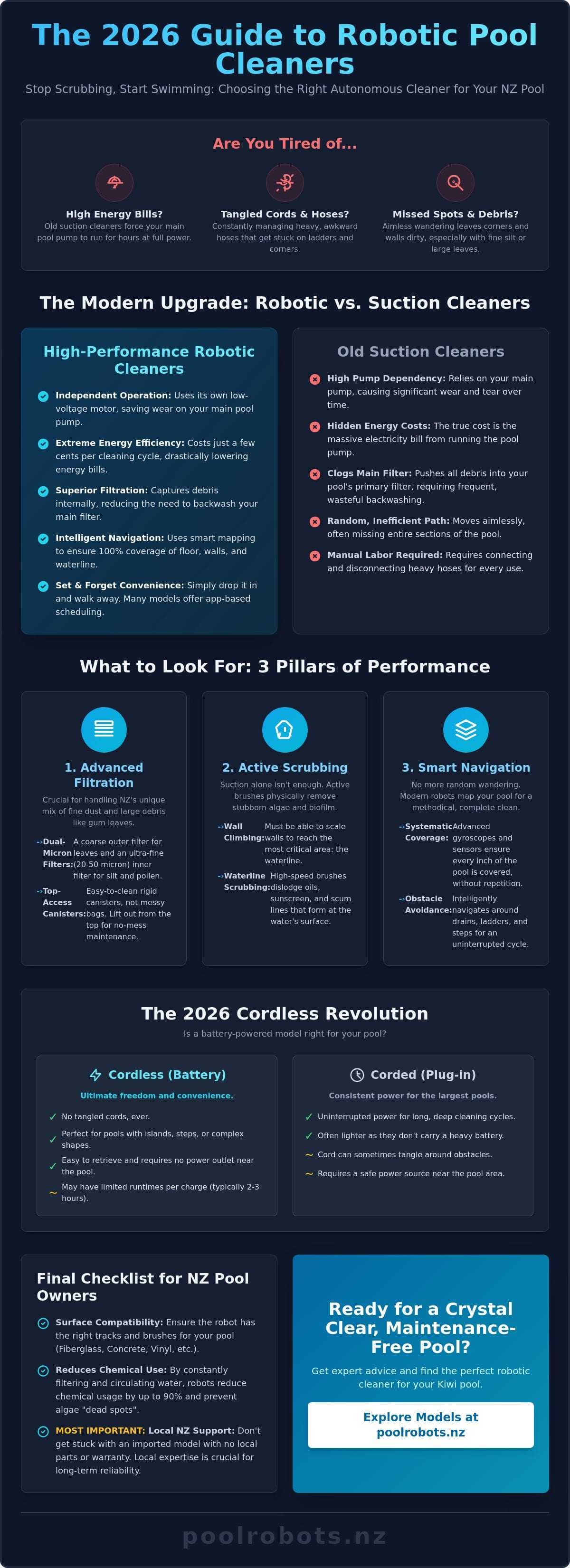
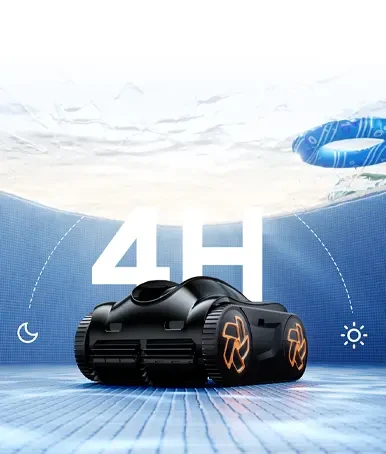
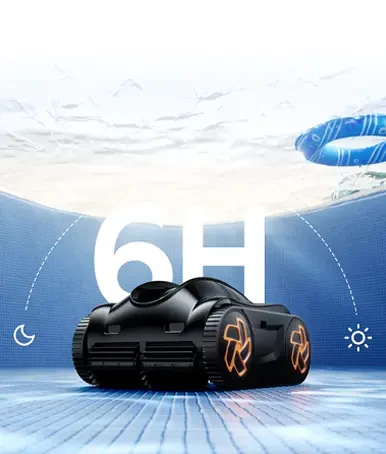
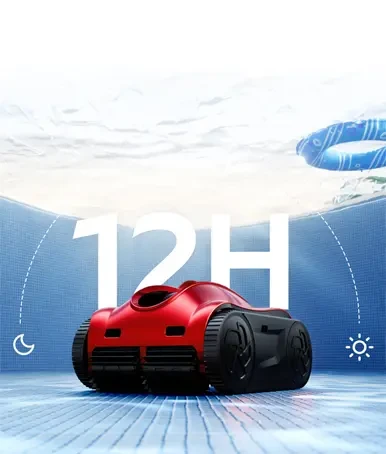
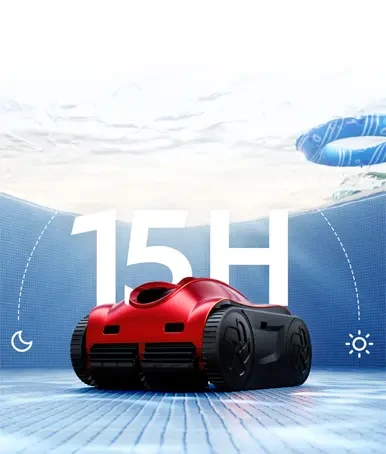
The secret to 2026 performance lies in the move toward brushless motors. These motors are more efficient, generate less heat, and provide the torque needed for heavy-duty scrubbing without draining the battery prematurely. The current industry standard for a high-quality cordless robot is a run time of 120 to 180 minutes. This is more than enough to clean most residential pools twice over. You should also look for fast-charging capabilities. A quality unit should reach a full charge in about 3 to 4 hours. The iGarden K Series Pool Robots are a prime example of this endurance, offering the battery life needed to handle large NZ pools on a single charge.
The End of the "Cable Twist"
Frustration with corded robots often peaks during storage. Managing a 15-meter cable is a chore, and bulky cable reels take up valuable space in your garden shed. Cordless robots solve this problem entirely. Because there is no heavy cable to reel in, the machine is much easier to lift out of the water and move to its charging station. This simplicity encourages more frequent cleaning, which keeps your water quality higher. Without a cable pulling on the unit, the robot can maintain better contact with the pool surface, leading to a more consistent and thorough clean across the entire floor.